A used boat listing tells you three things worth money: whether the engine runs, whether the trailer comes with it, and whether the title is in the seller's name. Sort every sentence in the advert into one of those three, and then look at which one the seller left blank. The blank one is usually your first question.
Most of the words in a Marketplace boat ad are mood. "Great family boat", "lots of fun memories", "priced to sell". They are usually true, and they tell you nothing. The sentences that carry information are the short, slightly awkward ones about the motor, the trailer and the paperwork, and those are the ones this guide decodes. (If you came here because someone said a boat was "listing" at the dock, that is the other meaning of the word: a boat leaning to one side has its own guide.)
What does a Marketplace boat listing usually leave out?
A listing has a price, a location, some photos and whatever the seller felt like typing. Nothing makes them type the parts you need. The gaps tend to be the same ones:
- An hour figure for the engine. "Low hours" with no number in front of it is a feeling.
- The date it last ran, as opposed to whether it runs in principle.
- Whether the trailer is included and has its own paperwork. The trailer is a separate road vehicle with its own VIN, and often its own title.
- Whose name is on the title. "Have title" does not say whose, or which object it covers.
- The hull number. Few sellers post it, and it is the one thing that ties the boat to the paperwork.
- Where the boat is kept. A listing that never shows the boat anywhere in particular can be a warning on its own, which the scam guide explains.
A missing fact is not a red flag by itself. Plenty of honest sellers write two lines and post. But each gap is something you should ask about in writing before you drive, and the questions to ask a boat seller turns that list into a single message you can send.
What do "runs great", "ran when parked" and "needs TLC" mean for the engine?
They are three different claims, and only one of them is about today.
"Runs great" says the engine runs now, in the seller's opinion. It is the strongest of the three and it is still a claim with no evidence attached. Ask when it last ran, how many hours are on it and whether there are service records, and ask the seller not to start it before you arrive so you can watch a cold start yourself.
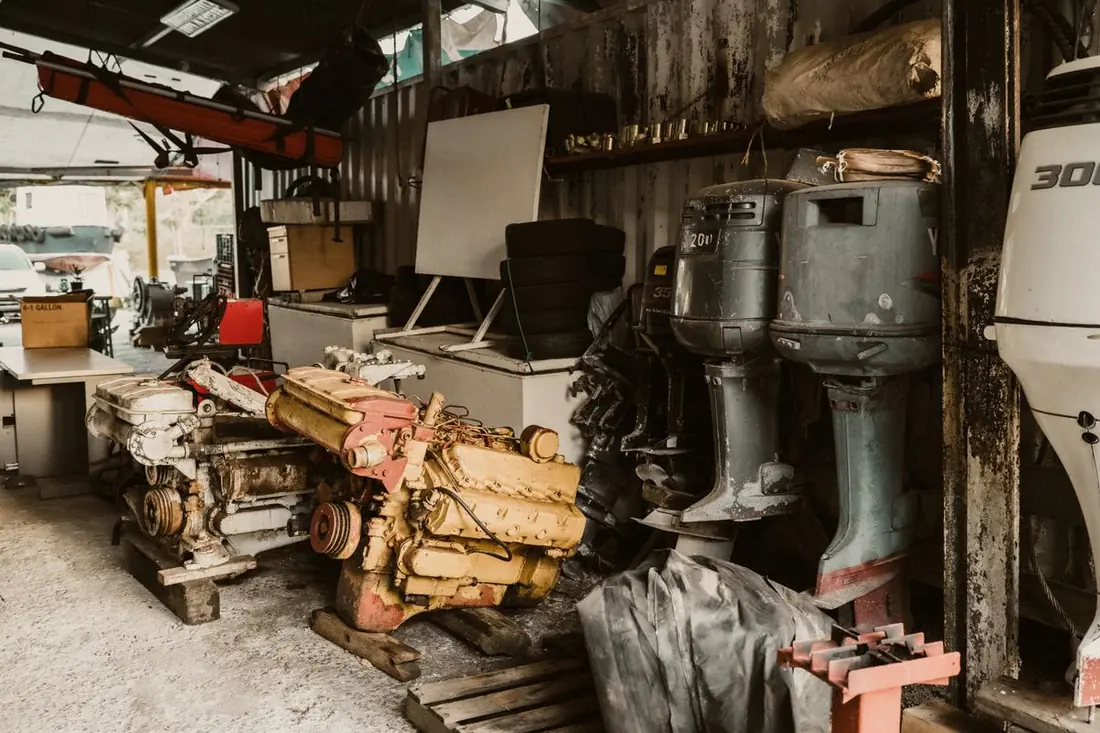
"Ran when parked" says the engine ran at some point in the past, and the seller is not saying it runs now. Assume it does not. Fuel gums up, cylinders rust when a motor sits, and impellers go hard and crack. What "ran when parked" costs puts a repair range against each of the usual engine phrases, including "turns over but won't start" and "just needs a tune up".
"Needs TLC" is the vaguest phrase in the whole vocabulary, and the vagueness is the point. It tells you the seller knows something needs doing and has chosen not to say what. It might be cushions. It might be a soft floor. Ask them to name the work, in writing. If the answer moves from the upholstery to the transom or the stringers, read the structural phrases before you go any further, because those are the repairs that cost more than the boat.
How do you tell if the trailer is included and titled?
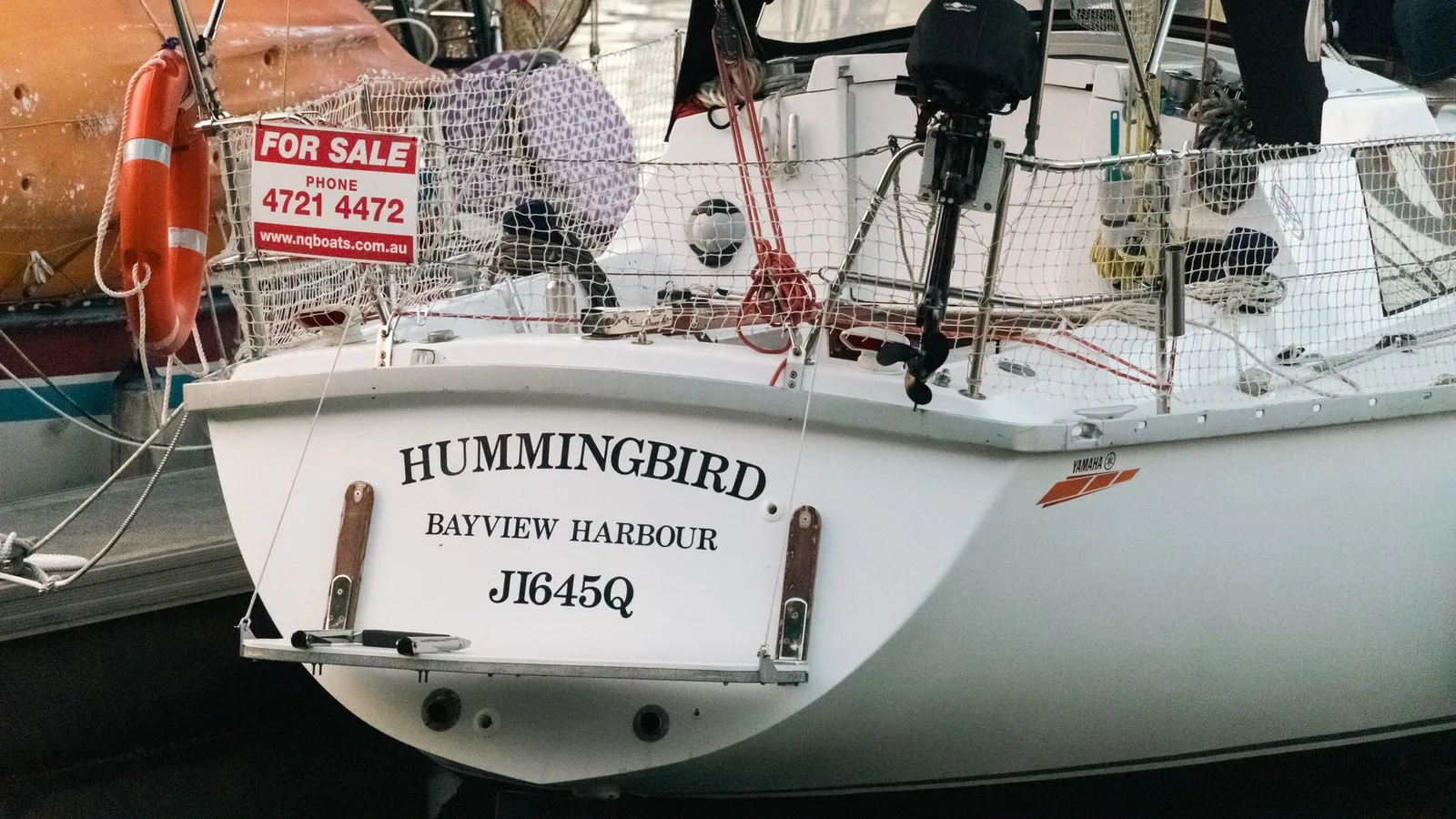
Read the listing for the word "trailer" and then read what is next to it. "Trailer included" says the trailer comes with the boat. It does not say the trailer is road-worthy or that it has paperwork. "No trailer" means you need one, and a way to get the boat home on the day. A listing that never mentions a trailer at all, with photos that show one, is a question, not an answer.
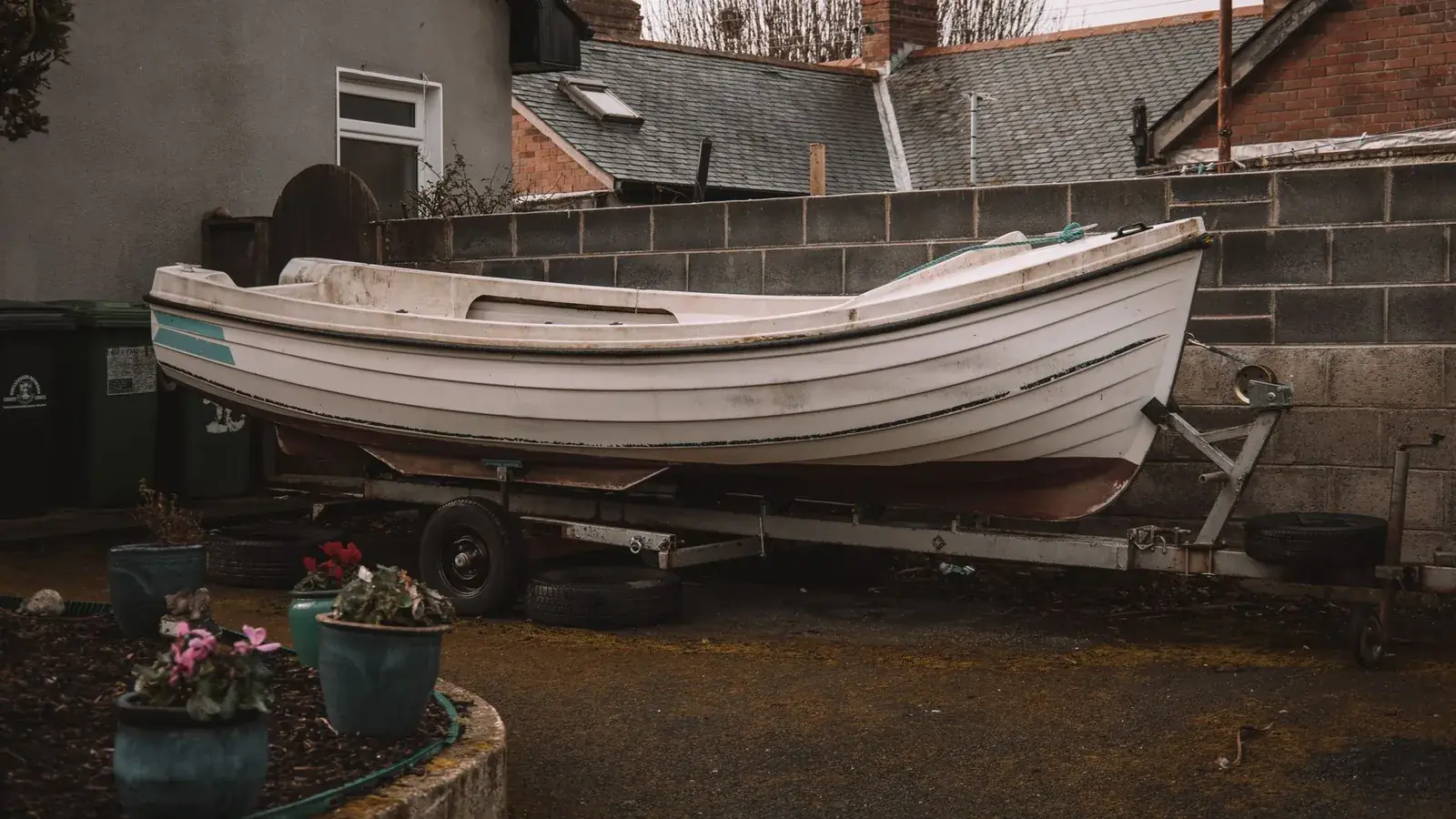
The paperwork is the part people miss. The trailer carries its own VIN stamped on the frame, and in many states its own title, though some states do not title trailers under a set weight. So a seller with "title in hand" may be holding the boat's title and nothing for the trailer. Ask which one they mean. Once you are there, the trailer checks cover the bearings, tire date codes, lights and welds, and towing it home covers whether your truck can actually pull it.
What do "clean title", "title in hand" and "no title" mean?
These read as if they mean the same thing in every state. They do not.
"Clean title" is borrowed from car sales. On a boat, sellers usually mean three things at once: a title exists, it is in their name, and there is no lien on it. Ask about all three separately. A lien matters because a new clean title cannot be issued to you until the lender records that the loan was paid off.
"Title in hand" means the seller has the physical document now, not "coming in the mail". It is a good sign. It still does not tell you whose name is on it, or whether it covers the trailer.
"No title" or "bill of sale only" can be completely normal or a dead end, and only the state decides which. Some states issue no boat title at all, some title only boats over a set length, and some title everything. What a used boat needs in each state answers it row by row, and buying a boat with no title covers what to do when the seller says it in a state where it matters.
Which listing phrases are scam warnings?
Scam listings have their own vocabulary, and it is mostly about everything except the boat. The patterns that turn up again and again:
- A price far below comparable boats, with a sympathetic story attached: a transfer, a deployment, an estate.
- "Text me at" or an email address in the description, to move the conversation off Marketplace.
- Any reason you cannot see the boat in person, followed by an offer to ship it.
- A deposit to "hold" it, or a request for gift cards, a wire, or an escrow service the seller picked.
Notice that none of them is about the boat itself. How Marketplace boat scams work walks through each pattern and what to do if you have already paid.
The phrases in one table
| The listing says | What it tells you | What to ask | Guide |
|---|---|---|---|
| "Runs great" | The seller says it runs now | When did it last run, how many hours, any records? | Seller questions |
| "Ran when parked" | It ran once. Not a claim it runs now | When was it parked, and has it been turned over since? | Ran when parked |
| "Needs TLC" | Something needs work, and the seller has not said what | What exactly needs doing? | Ran when parked |
| "Trailer included" | The trailer comes with it. Nothing about its paperwork | Is the trailer titled or registered in your name? | Trailer checks |
| "Clean title" | Usually: a title exists, in their name, with no lien | Whose name is on it, and is there a lien? | Titles by state |
| "Title in hand" | They have the document now | Does it cover the boat, the trailer, or both? | Titles by state |
| "No title" / "bill of sale only" | Normal in some states, a dead end in others | Which state is the boat registered in? | No title |
| "Text me at…" | A move off Marketplace | Keep the deal on Marketplace | Scams |
What should you ask before you drive out?
Whatever the listing left blank, plus a photo of the hull number on the transom. That photo lets you decode the HIN and check the model year against the year in the ad before you spend the trip. Send everything in one message, so a seller with a problem has to dodge a specific question rather than a vague one. What to ask a boat seller has the message written out, and the inspection guide picks up once you are standing next to the boat.
How does DockSnipe surface these details in an alert?
DockSnipe watches Facebook Marketplace in whatever radius you set and sends new boat listings to Telegram with the photos, the price, and the engine, trailer and title facts read out of the seller's description. You see which of the three the seller covered before you open the listing, and which one to ask about first.
Cite this page
This page sorts listing phrases into the facts the other DockSnipe guides already establish, and states nothing they do not. The engine phrases come from the ran-when-parked guide, the trailer paperwork from the trailer checks guide, the title and lien points from the no-title guide and the state-by-state title guide, which cite each state agency, and the scam patterns from the scams guide. The page carries no statistics about listings and no prices. Last checked November 3, 2026.
You may republish these figures with attribution and a link to https://docksnipe.com/blog/how-to-read-a-boat-listing.
Header photo by Joaquin Carfagna on Pexels.