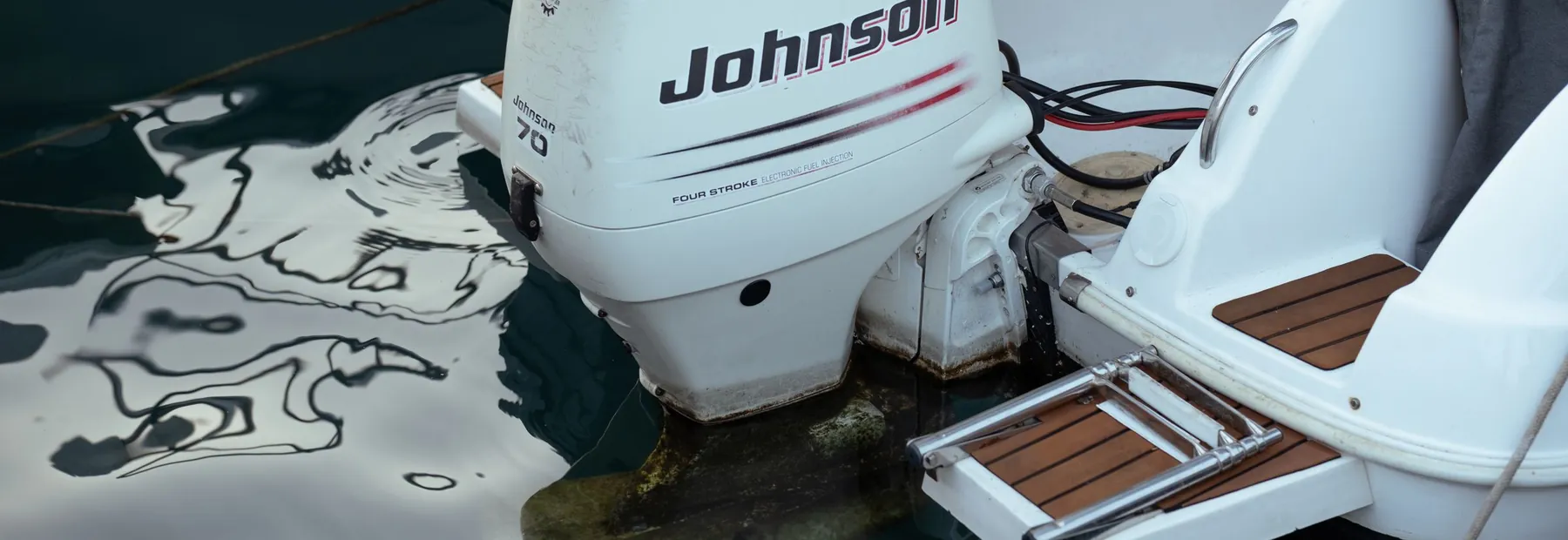
Most people check out a used boat in the wrong order. They walk the deck, sit at the helm, imagine a Saturday, and only then look at the engine, by which point they have already decided to buy it. Do it backwards and you will walk away from more boats, which is the point.
How do you check out a used boat, and what comes first?
A boat is really three purchases stacked together: an engine, a hull, and a trailer. They fail at wildly different prices. A repower runs $15,000 to $30,000. Structural work on a rotten transom or stringers can run five figures and takes the boat off the water for a season. A trailer is $1,500 to $5,000. Cosmetics, upholstery and electronics are rounding errors next to those.
So look at them in cost order. Engine, structure, trailer, then everything else. If the first one fails, you are done, and you have saved yourself an hour of being charmed by a nice cooler seat.
All of that assumes there is a boat at the other end of the drive. Before any of it, read the listing itself, because a share of what turns up on Marketplace is not a cheap boat at all: the boat scam patterns that repeat on Facebook Marketplace covers the shapes that keep coming back, and each one takes about a minute to rule out from your phone.
Where are the seven things you actually have to look at?
Everything below happens at seven places on the rig. None of them needs the boat in the water and none of them needs tools you cannot carry in one hand.
- 1Transom and engine mount. Tilt the outboard, then pull and push on the powerhead. Any flex or creak is five figures.
- 2Hull identification number. Starboard side, top edge of the transom. Read it against the title, character by character.
- 3Deck and core. Walk all of it in soft shoes. Sponginess or a dead, dull feel means water in the core.
- 4Bilge and stringers. Real light, head in. Standing water, rust stains, cracked stringers, repairs that do not match.
- 5Lower unit. Ask when the gear lube was last changed and whether it came out milky. Cheapest question, most expensive answer.
- 6Trailer bearings. Jack each wheel clear, rock it at twelve and six, then spin it. Play, grinding or roughness means new bearings.
- 7Coupler and chains. The coupler should latch positively onto the right size ball, and the chains should exist and cross under the tongue.
1. Does the engine start cold, and what comes out of it?
Ask the seller not to start or warm the engine before you arrive, and say so when you set up the viewing. A cold start tells you far more than a warm one. An engine that has been running for twenty minutes before you pull in is hiding something more often than not.
What you are looking for, roughly in order:
- Does it start cold, without ether or a long crank? Hard cold starting on a four-stroke outboard is a real signal, not a quirk.
- What comes out of the exhaust in the first thirty seconds? Some smoke and steam is normal. Blue smoke that keeps going, or a sweet smell, is not.
- Water pump. There should be a strong, steady stream from the telltale. A weak dribble means an impeller at minimum, and an overheated powerhead at worst.
- Oil. Pull the dipstick on a four-stroke. Milky or over-full is water in the oil, and water in the oil is the end of the conversation.
- Lower unit oil. Ask when the gear lube was last changed and whether it came out milky. This is the cheapest question with the most expensive answer.
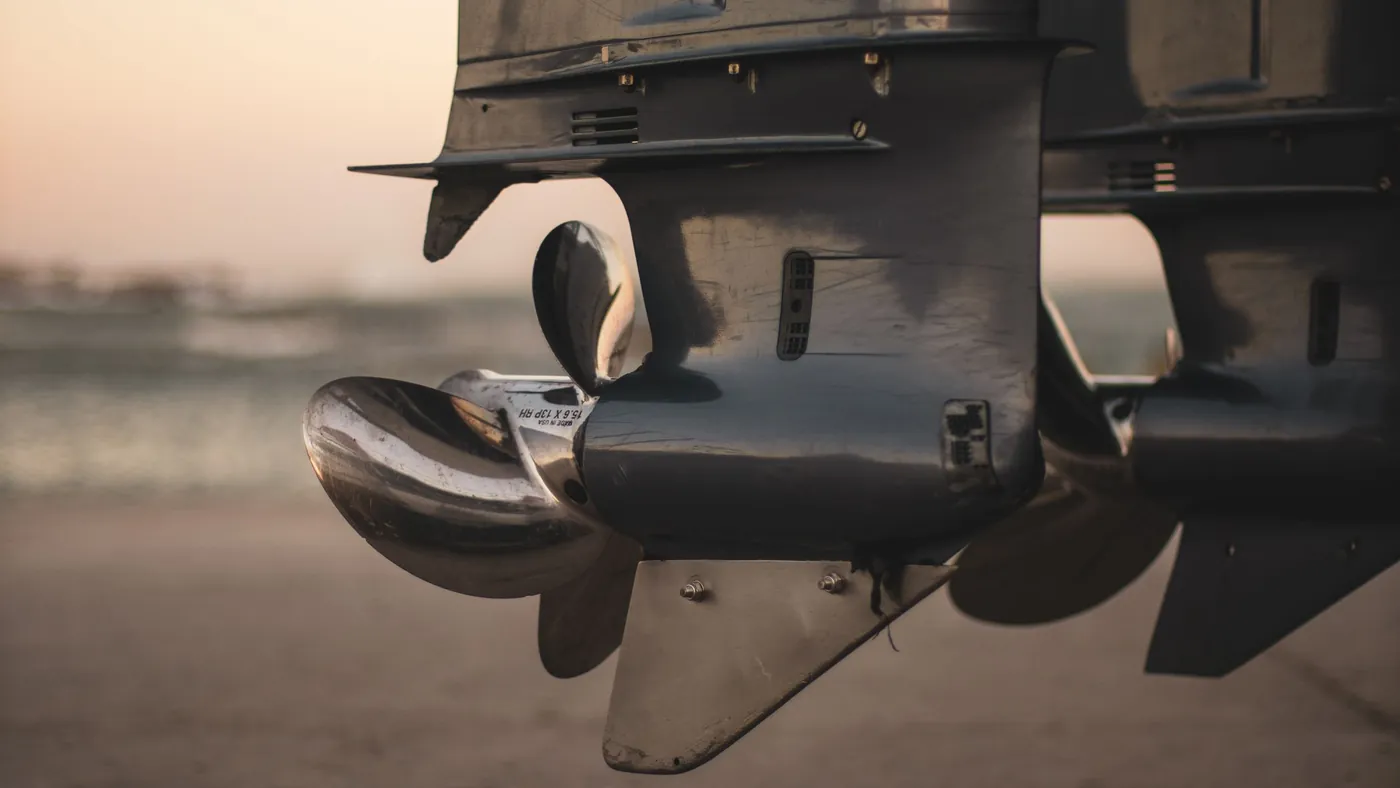
What does a compression test actually tell you?
A compression tester screws into a spark plug hole and reads the pressure that cylinder builds while the engine cranks. You are not looking for a magic number, because what counts as healthy varies by engine. You are looking for consistency across cylinders. If one is meaningfully lower than the others, that cylinder has a problem, and on an outboard that usually means the powerhead comes apart.
It is a twenty minute job and it is the single highest-value check you can run on a used boat. If a seller will not let you do one on an engine they claim runs fine, that refusal is your answer.
Which phrases mean the engine is the problem?
Any of these and you are not buying a boat, you are buying a hull with an anchor bolted to the transom. Price it that way or move on, and if you want the arithmetic, we broke down what a "ran when parked" motor actually costs to fix job by job. This is exactly what DockSnipe flags before you drive out.
2. Is the hull structure sound, or is the core wet?
Engines can be replaced. A rotten stringer grid usually cannot be, economically. Fibreglass boats absorb water through old fastener holes and bad bedding, and the wood underneath goes soft while the outside still shines.
- Walk the deck in bare feet or soft shoes, the whole deck, especially around the console base, hatches and any deck fitting. Sponginess or a dull, dead feel underfoot means water in the core.
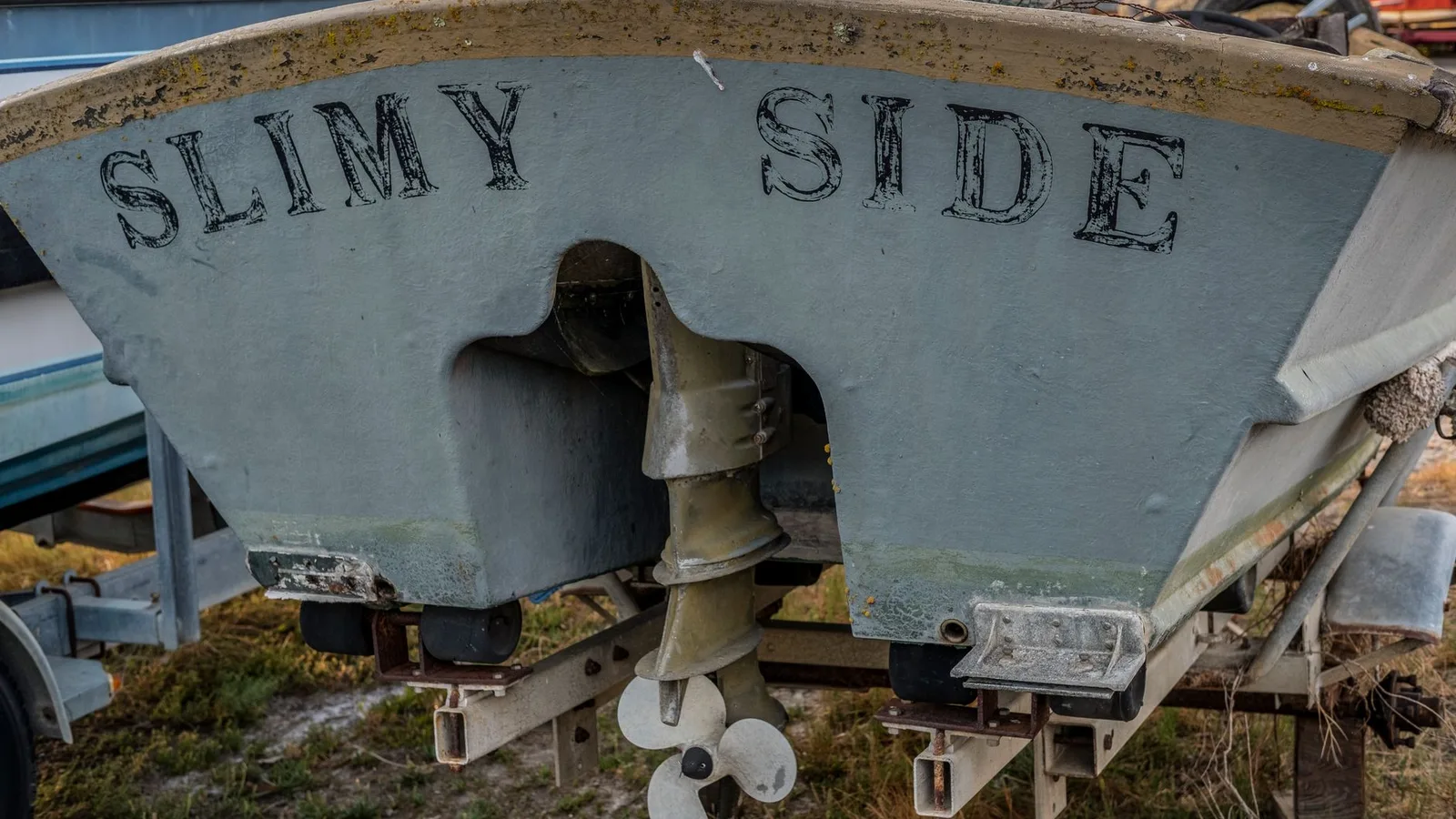
- Grab the outboard and lift. With the engine tilted, pull up and push down on the powerhead. Any flex or creak in the transom is a serious finding.
- Tap along the transom and deck with a plastic mallet or the handle of a screwdriver. Solid glass rings sharp. Wet core thuds.
- Look in the bilge with a real light. A bright inspection light shows you standing water, rust stains, cracked stringers and sloppy repairs that a phone torch will not.
- Check for repairs that do not match. A patch of gelcoat in a slightly different white, or fresh paint only on the bottom of the transom, is worth asking about directly.
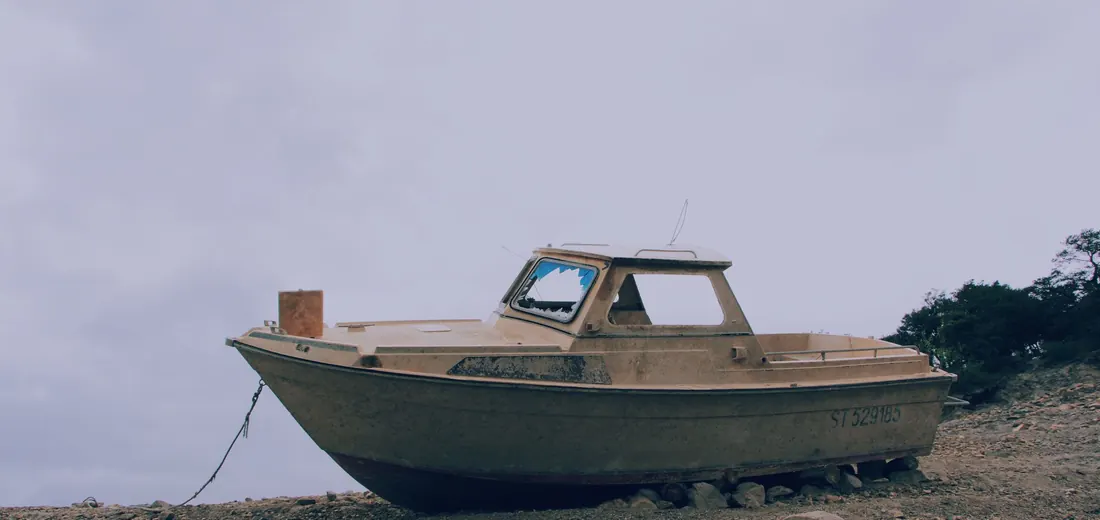
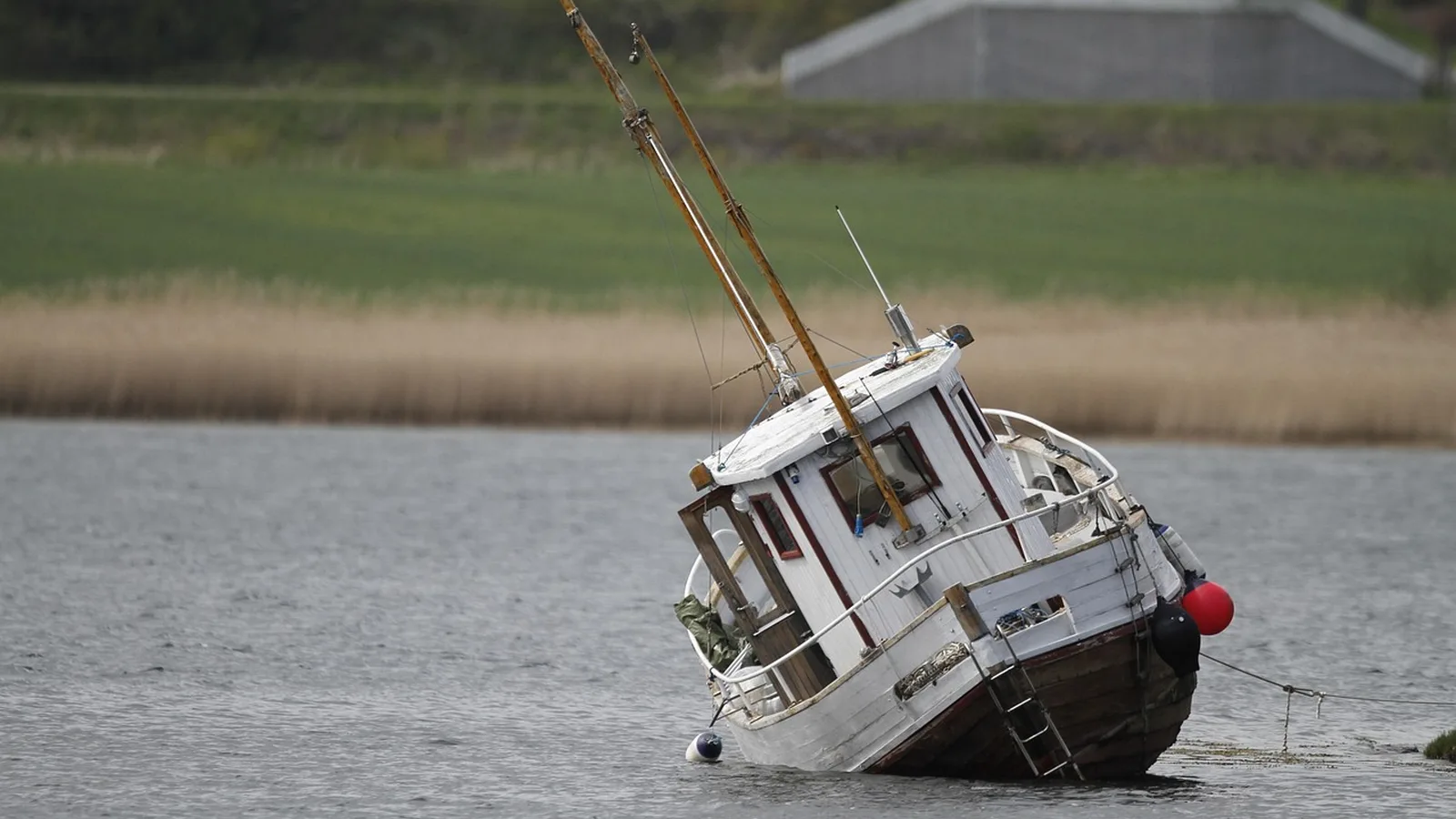
If you are looking at boats regularly, a moisture meter is worth carrying. It reads moisture through the laminate and turns "I think this feels a bit soft" into a number you can point at while you negotiate. If the boat is also sitting down on one side, the two findings belong together: what it means when a boat is listing works through which causes are gear in the wrong locker and which are a hull holding water.
3. Will the trailer get the boat home?
The trailer is a vehicle with its own failure modes, and it is often the part that has sat outside untouched for years while the boat was covered. What follows is the short version; the trailer checks that matter before you buy goes through each one properly.
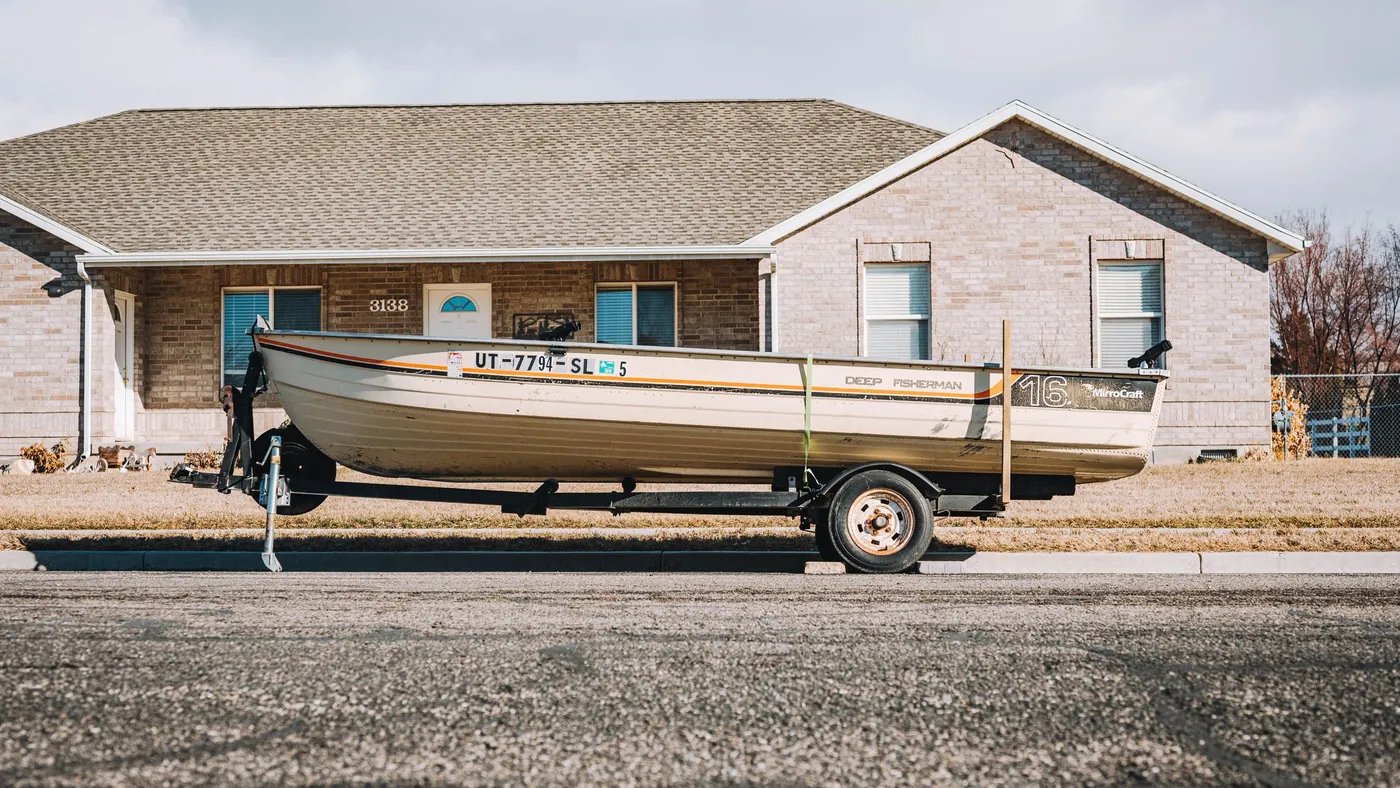
- Bearings. Jack a wheel off the ground and spin it. Grinding, roughness or play means new bearings, and bearings that fail on the highway can take the whole hub with them. A bearing kit is cheap; a roadside failure with a boat on the back is not.
- Tires. Look at the date code, not the tread. The last four digits of the DOT number on the sidewall are the week and year it was built, so 0819 is the eighth week of 2019, and NHTSA notes that vehicle and tire makers commonly call for replacement somewhere between six and ten years old regardless of how the tread looks (NHTSA TireWise). Trailer tires sit still in the sun, which is the worst thing you can do to a tire, so they reach that point sooner than the ones on your truck.
- Lights and wiring. Have someone work the pedal and indicators while you watch. Corroded connectors are normal, a rotten harness is a half-day job.
- Frame and welds, especially at the crossmembers if it has ever lived in salt.
- Winch strap and safety chain. Cheap to replace, and a good sign of how the owner treated everything else.
All of that is what the trailer looks like standing still. Whether you can leave with it today is a different question, and getting it home behind your own vehicle is where the weights, the hitch and the wiring have to line up.
4. Whose name is on the title, and how many titles are there?
In most states the boat and the trailer carry separate titles. Check both, check the hull identification number on the transom against the paperwork, and check that the name on the title is the person standing in front of you. Which paperwork you should be looking at depends on where the boat is registered, and it is not the same question everywhere: what a used boat needs in each state covers all fifty and DC.
The HIN is 12 characters, and the Coast Guard's construction rules put the primary one on the starboard outboard side of the transom, within two inches of the top of the transom, gunwale or hull-to-deck joint, whichever is lowest. A second, identical number is required elsewhere on the hull, usually somewhere unadvertised (USCG hull identification guidance, 33 CFR 181.29). Two things follow from that. A transom plate that has been replaced, ground down or filled is worth a hard question. And the two numbers should match each other and the title, so if a seller only ever shows you one, find the other yourself.
The characters themselves are readable once you know where the fields sit. Get a photo of the plate before the drive and decode the hull identification number: it splits into the builder code, the month and year the hull was certified, and the model year stamped into the transom. That last one is a different number from the year in the advert, and the two do not always agree.
"Bill of sale only" is not automatically a dealbreaker, and plenty of legitimate boats have messy paperwork. It is a discount and a delay, and you should know which one you are dealing with before you drive out, not after.
What does each finding actually cost?
The same seven areas, with what a pass looks like and what a failure is worth. The cost column is the range a US marine shop would typically quote for the repair as of July 2026; labor rates move a long way between markets, so use it to decide whether to keep negotiating, not as an estimate for the work.
| System | Check | Pass looks like | Failure costs |
|---|---|---|---|
| Engine | Cold start, exhaust, telltale, oil | Starts without ether, steady telltale stream, clean oil | $15,000 to $30,000 to repower |
| Compression | All cylinders, engine cold | Consistent across cylinders | Powerhead, four figures and up |
| Lower unit | Gear lube color and history | Clean lube, changed recently | Rebuild, low four figures |
| Transom | Lift and push the tilted outboard | Dead solid, no creak | Five figures, boat out for a season |
| Deck and stringers | Walk it, tap it, light in the bilge | Rings sharp, no soft spots | Five figures, often more than the boat |
| Trailer bearings | Rock and spin each wheel | No play, spins quiet | Bearings are cheap, a seized hub on the interstate is not |
| Trailer tires | DOT date code, not tread | Under five or six years old | A few hundred for a set |
| Titles | Hull, trailer, and the motor in some states | All present, names match, HIN matches | A delay and a discount, or a walk-away |
Read the table top down. The first four rows are the reason to leave; the last four are the reason to say a number. If you want the paperwork row in full, it is covered in what "no title" actually means when you buy a used boat.
What should you bring to a viewing?
None of this needs a workshop. A compact kit covers almost every check above:
- A compression tester and a plug socket that fits the engine you are going to see.
- A bright flashlight for the bilge and under the console.
- A moisture meter if you look at boats often.
- A tire gauge and a basic socket set for the trailer.
- Rags, and something to kneel on. You will be on the floor of the bilge.
Prices move around, so check the current one before you buy anything.
What should you ask the seller?
Ask how long they have owned it, why they are selling, where it has been stored, and when it last ran. Then stop talking. Sellers fill silence, and what they fill it with is usually the thing you most needed to know.
Cite this page
The repair costs above are the ranges a US marine shop typically quotes for each job, not a published price survey, and labor rates vary widely between markets, so treat them as negotiating context rather than an estimate for the work. Last checked August 4, 2026. The hull identification number rules are the US Coast Guard's and are cited inline to 33 CFR 181.29.
You may republish these figures with attribution and a link to https://docksnipe.com/blog/how-to-inspect-a-used-boat.