Used boat listings have a vocabulary. Most of it exists to describe a problem without naming it. None of it is deliberate fraud, mostly. It is just what people write when they want the thing gone and would rather you found out later.
Where these figures come from. The dollar ranges on this page are our own: typical US marine shop quotes and parts pricing gathered from repair work on outboard-powered trailerable boats, current as of July 2026. No authority publishes a price index for this work, so there is nothing to cite for the ranges themselves. Labor rates move a long way between markets, and a coastal yard in season is not a rural shop in February. Treat every range as something to sanity-check a listing against, not as a quote. The few claims here that do have a primary source carry a link to it.
What does "ran when parked" actually mean?
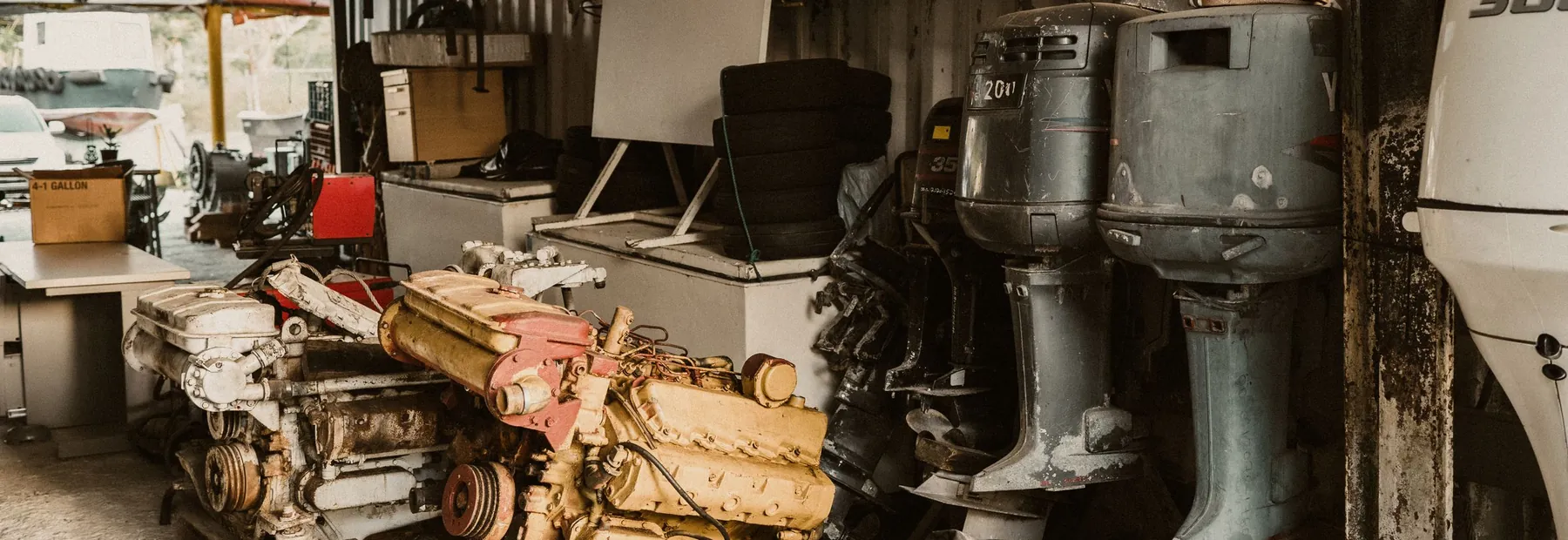
On a boat the engine is most of the value. A $15,000 boat with a dead outboard is a $4,000 hull, because a repower runs $15,000 to $30,000 depending on horsepower, and that is frequently more than the whole rig is worth. So the engine phrases move the price more than anything else in the ad.
The practical rule: if any of those appear, stop pricing the boat against running examples. Find what a comparable hull with no engine sells for, add the trailer if there is one, and start from there. That is the number, and it is usually a long way below the ask. If you do go and look at it anyway, our walkthrough of how to inspect a used boat before you hand over money puts the checks in cost order, which is the order that saves you the drive home.
There is a version of this that is not a bargain at all. The phrases above are how an honest seller explains a low price, and a number sitting far under even the no-engine figure is not explaining anything. A listing that is too good for the price it is asking is the first pattern in the scam guide, and it takes a minute to rule out from your phone.
Which listing phrases mean structural damage?
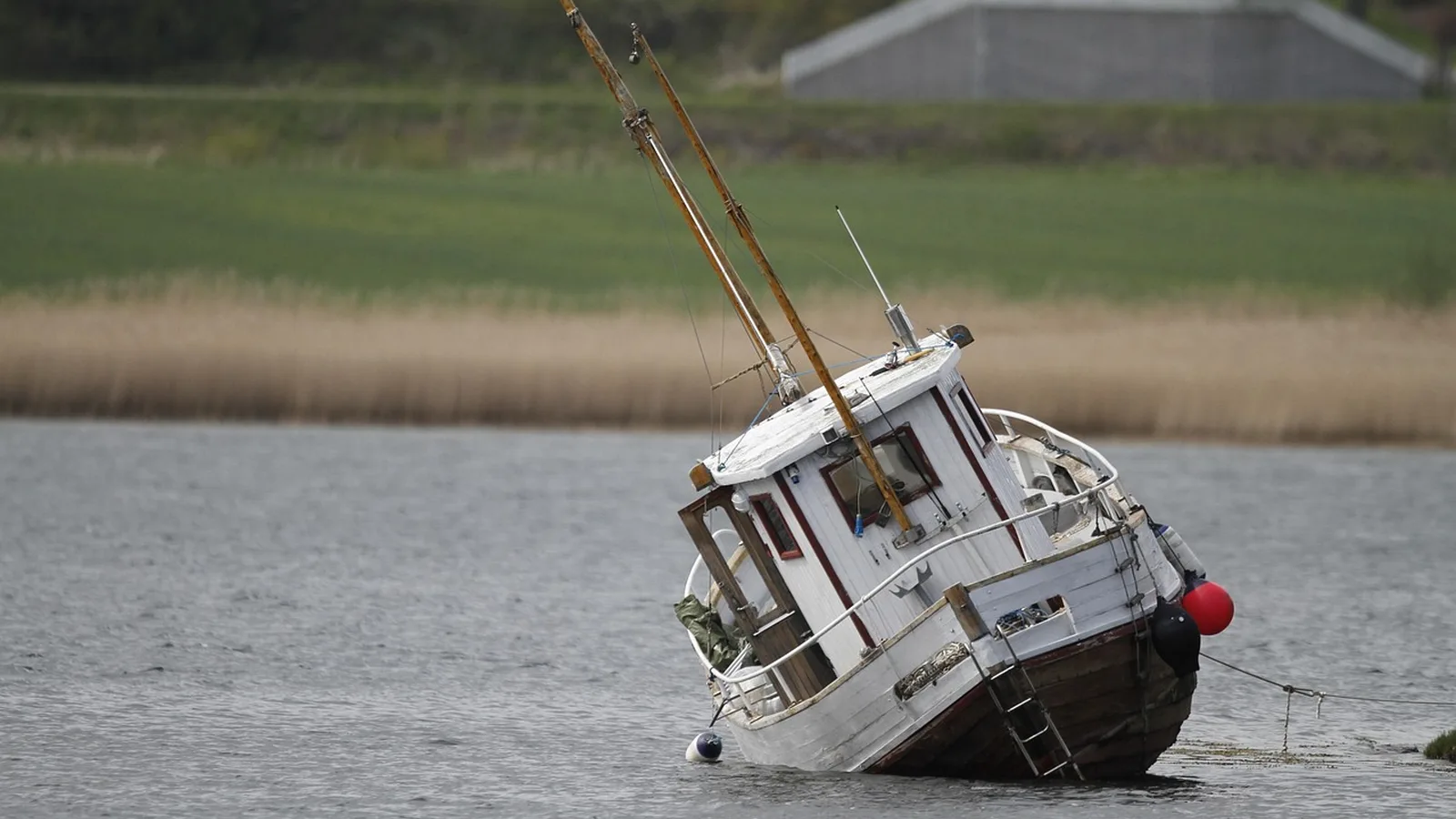
Engines bolt on. Structure does not.

Flippers avoid these boats, which is a useful signal in itself. When a boat sits unsold for two months at a keen price, structure is often the reason.
What do the paperwork phrases tell you?
A trailer that comes with the boat is not automatically a saving either. It is a second vehicle with its own wear, its own title and its own way of ruining a Saturday: bearings, brakes and what neglect costs covers what to look at before you assume the included trailer is a bonus.
Which phrases mean a boat is worth more, not less?
The same vocabulary works in your favor. These raise what a boat is worth, or how motivated the person selling it is.
Do "freshwater only" and "low hours" mean anything?
Two phrases show up constantly and mean almost nothing on their own.
"Freshwater only." Sometimes true and genuinely valuable, because salt is what kills boats. Also unverifiable and repeated by people who heard it from the last owner. Go and look at the engine mounting bolts, the trim tabs and the trailer frame. Salt leaves evidence.
"Low hours." Meaningless without a number, and an engine that has sat unused for eight years is often in worse shape than one with steady use. Roughly speaking, under 100 hours per year of age is normal. Very low hours on an old engine is a question, not a selling point. The year in the ad deserves the same doubt: decode the boat's HIN and the hull gives you its own model year to hold against the one the seller typed.
What does each job actually cost?
The phrases above map onto a fairly short list of jobs. These are the ranges to hold in your head while you read a listing, on the basis stated at the top of this page.
| Job | What triggers it | Typical range | Read |
|---|---|---|---|
| Repower, outboard | "No compression", "needs a powerhead", dead motor | $15,000 to $30,000 | Usually more than the rig is worth. Price the hull. |
| Powerhead rebuild | One cylinder well down on compression | $3,000 to $7,000 | Rarely worth it below a 150hp four-stroke. |
| Lower unit rebuild | Milky gear lube, "lower unit issue" | $1,200 to $3,000 | Survivable. Negotiate it, do not walk. |
| Carburetor rebuild | "Needs carb work", "just needs a tune up" | $400 to $1,200 | Per carb on a multi-carb two-stroke. Count them. |
| Fuel system clean-out | Sat two seasons or more, "ran when parked" | $600 to $2,000 | Tank, lines, filters. Almost always needed after a long sit. |
| Impeller and water pump | Weak telltale, unknown service history | $300 to $700 | Do it on any boat with no recent record, regardless. |
| Transom rebuild | "Soft transom", flex when you lift the outboard | Five figures | The end of the conversation on a trailerable boat. |
| Deck core repair | "Soft spot in the floor" | Five figures | Cutting the deck open. Often more than the boat. |
| Stringer repair | "Stringers need attention" | Five figures and up | Where a project becomes a donation. |
| Trailer bearings | Play or grinding when you spin a wheel | $150 to $500 | An expected job on any used trailer. |
| Trailer tires | DOT date code over five or six years | $400 to $900 a set | Replace on age, not tread. |
| Buying a trailer | "No trailer" | $1,500 to $5,000 | Plus the problem of getting the boat home today. |
Two patterns fall out of that table. Everything above the transom row is a number you can negotiate against, and everything from the transom row down is a reason to leave. And the cheap rows stack: an impeller, a fuel clean-out and a set of bearings on the same boat is close to $3,000 before anything has gone wrong.
On the tire row, age rather than tread is not our opinion. Vehicle and tire manufacturers recommend replacing tires between six and ten years old regardless of how much tread is left, which is the guidance NHTSA collects under TireWise, along with how to read the date: the last four digits of the DOT code on the sidewall are the week and the year the tire was built. A trailer tire spends most of its life parked in sunlight and carries a heavy load in short bursts, which is why we treat the low end of that window as the number that matters.
One cost the table does not carry is the one that arrives the same day: a boat that will not start still has to get home, and the trailer under it does that work whether or not the engine ever turns over.
What will this boat cost me to put right?
Answer four questions about the listing and it adds up a range from the table above. Every figure it uses is already on this page. It can price a job; it cannot tell you whether the boat needs one, which is what the viewing is for. The ranges are wide because the real ones are.
Why automate reading the listings?
None of this is difficult. It is just tedious, and it has to happen fast, because the well-priced boats go the day they are listed. Reading forty listings a day looking for the phrase that changes the maths is exactly the kind of job you eventually stop doing properly.
That is the whole reason DockSnipe exists. It reads the description, pulls out the engine, trailer and title facts, and shows you the red flags alongside the green ones on every single boat it sends, including the ones it scores well. A tool that only tells you good news is a tool you stop trusting in week two.
Cite this page
The dollar ranges are our own, gathered from typical US marine shop quotes and parts pricing on outboard-powered trailerable boats and current as of July 2026. No authority publishes a price index for this work, so there is nothing to cite for the ranges themselves and the basis is stated at the top of the page rather than implied. Labor rates move a long way between markets, so each range is a figure to sanity-check a listing against rather than a quote. The claims that do have a primary source are cited inline: NHTSA TireWise for reading a DOT date code and for the six to ten year replacement window, and the Florida Highway Safety and Motor Vehicles department for vessel titling and for the 2,000 lb trailer exemption. Last checked August 25, 2026.
You may republish these figures with attribution and a link to https://docksnipe.com/blog/ran-when-parked-what-it-costs.