A boat is listing when it leans to one side and stays there at rest. It is not the same thing as a sailboat heeling under wind, and it is not a style of boat: it is a boat sitting unevenly because the weight on board is uneven, and the most common reason for that is water somewhere it was never meant to be.
The word does double duty on Facebook Marketplace, which is where most people meet it twice in one afternoon. A listing is the advert. A boat that is listing is leaning. This page is about the second one, because it is the version you can see in the seller's own photographs before you agree to drive anywhere.
What makes a boat sit down on one side?
Everything that makes a boat lean falls into two families, and they are worth very different amounts of money. One is weight that somebody put there. The other is weight that arrived on its own.
The order above is roughly the order of how worried to be, and the first two are the reason not to walk away from a leaning boat in a photograph without asking. A boat can lean because a seller left the anchor in the wrong locker. It can also lean because the deck core is full of water. The difference is one question and about ten minutes.
On a small outboard boat that foam is there by federal rule, not by the builder's choice. Monohull outboard boats under 20 feet that are rated for more than 2 horsepower have to carry enough flotation that, swamped and loaded in the Coast Guard's test, they float within 10 degrees of level (33 CFR 183.201, 33 CFR 183.225). That is the design intent a list works against. A dry, empty small boat that still sits down on one side is carrying weight the builder never planned for, and waterlogged foam is one of the few places that weight can hide.
Is it listing, heeling, or just loaded badly?
Three words get used for a boat that is not sitting flat, and they describe different things.
- Listing is a lean to port or starboard that persists at rest, with nothing pushing on it. It is a statement about how the weight is distributed inside the boat.
- Heeling is a sailboat leaning away from the wind while it is sailing. It is what the boat is designed to do, it goes away when the wind does, and it is not a defect.
- Trim is the fore-and-aft attitude, bow up or stern down. Same idea, different axis, and a heavy outboard on a light hull will do it without anything being wrong.
If the seller's photo is of a sailboat under way and heeled over, that is a picture of sailing. If it is a boat tied to a dock leaning on a still day, that is a list, and it is worth a message.

How do you spot a list in the seller's photos?
You can usually settle this before you message anybody, because the things that give a list away are the things sellers photograph anyway.
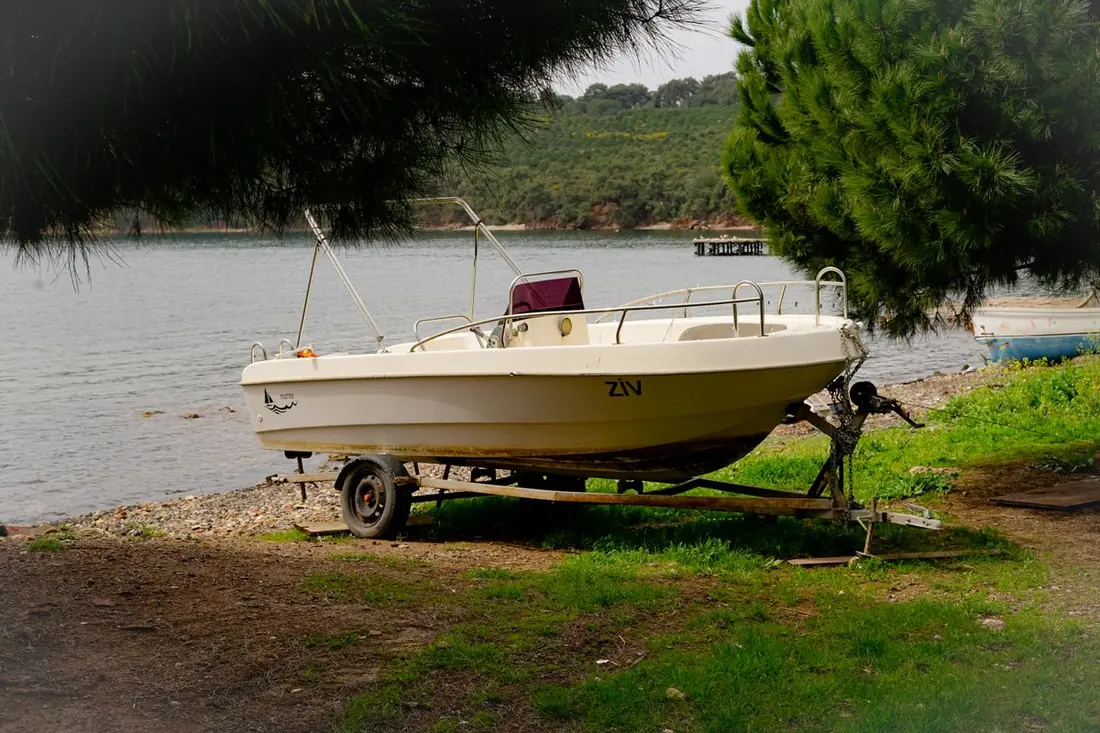
- Read the waterline, not the boat. The painted stripe or the growth line should sit parallel to the water. When one end of it is wet and the other is dry, the hull is down on one side, whatever angle the camera was held at.
- Use the horizon or the dock. A phone held crooked tilts everything in the frame together. A listing boat is tilted relative to the dock edge, the pilings and the boats either side of it.
- Look at the neighbours. In a marina shot there are a dozen straight references in the same picture.
- Check whether every photo is from the same side. A seller who has taken eight pictures of one flank of a boat is not necessarily hiding anything. It is still the first thing to ask for: one shot square-on from the bow or the stern settles it in a second.
Reading what a listing does not show is most of the job of buying a used boat from a phone, and it is the same skill the rest of these guides are about: what the seller's phrases actually cost you covers the words, and this covers the pictures.
What do you check first when you get there?
Work from the cheap explanations to the expensive ones, because the cheap ones are more common and they take a minute each. One check happens before you leave the house: ask for a photo of the transom plate and decode the HIN before you go and look, because a model year that disagrees with the advert tells you how carefully the rest of the listing was written.
- Empty the low side. Take out the gear, the anchor, the cooler, the batteries if they are loose. If the boat comes level, you have your answer and it costs nothing.
- Open every locker and put a hand in the bottom. Water in a compartment on the same side as the lean is the explanation until proven otherwise. Note whether it is fresh or salt, and whether anything is obviously feeding it.
- Find the bilge and see whether the pump runs. Ask when it last did. On a boat kept in a slip, "the pump has been off since the battery died" is a sentence with a cost attached.
- Stand on the deck and walk it. Soft, spongy or flexing underfoot on the low side points at a wet core rather than at loose gear, and that is the point where the conversation changes.
- Tap and measure the transom and the stringers. A dull thud where the rest of the hull rings, and a moisture meter reading much higher on the low side, both say the same thing. Check the current price before you buy one; it is the cheapest tool on this list and the one that answers the most expensive question.
The full order for the rest of the boat, engine included, is in the used boat inspection walkthrough, which puts the checks in cost order rather than in the order you happen to walk around the hull.
Can a boat list on its trailer?
It can, and on a trailer the list is often not about the boat at all. Bunks settle unevenly, one side's carpet wears through before the other, a roller collapses, and the ground under a trailer in a storage yard is rarely flat. Any of those will tip a perfectly sound hull.
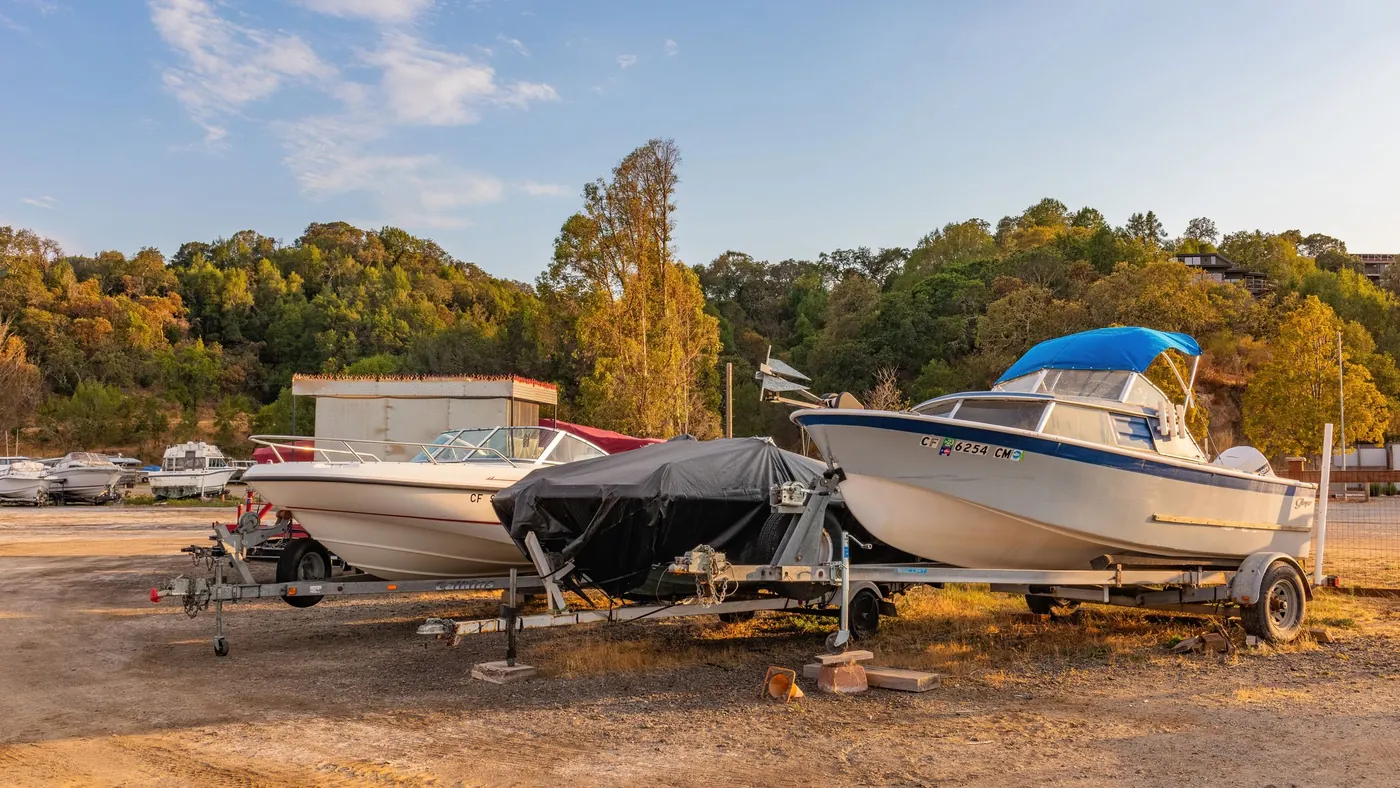
The way to separate the two is to change one thing. Look at the trailer from behind and see whether the bunks sit at the same height. Check whether one tire is soft. If the yard slopes, that is your explanation. A boat that leans the same way on level ground, with the gear out and the bunks even, is leaning for its own reasons. The trailer itself is worth its own fifteen minutes either way, which is what the trailer checks are for.
When is a list a discount, and when is it a walk-away?
Nothing here is automatically fatal, and nothing here is automatically fine.
It is a nothing when the boat stands up as soon as the gear moves, or when it is the trailer or the dock line doing it. Fix it in the parking lot and forget it.
It is a job with a number on it when a compartment is holding water and you can see where the water is getting in, or when the bilge pump and its battery have been neglected. These are real repairs on an old boat and they are the kind of thing to negotiate against rather than run from.
It is a walk-away when the deck flexes, the transom reads wet, or the seller cannot say why the boat has been leaning for as long as they have owned it. A hull that has spent years absorbing water is the one repair that regularly costs more than the boat, and the listing phrases that go with it (soft spot, soft transom, stringers need attention) are covered in what those phrases actually cost.
The paperwork sits underneath all of it. A boat you are ready to negotiate on is only worth negotiating on if it can be transferred, and what your state requires to title and register a boat is the other half of the same decision.
Common questions about a boat that lists
What does listing mean on a boat?
It means the boat leans persistently to one side while it is at rest. The lean itself is the symptom; the cause is uneven weight, and the question that matters is whether that weight is gear somebody left in a locker or water that got into the hull.
Is a boat that is listing taking on water?
Often, but not always. Gear stacked on one side, a fuel tank filled off-center, uneven trailer bunks and a tight dock line all produce the same lean with a dry hull. The way to rule them out is to remove them one at a time and see whether the boat comes level.
Does a list get worse if you leave it?
That depends entirely on what is causing it, which is the reason to find out rather than to watch. Gear in the wrong locker never gets heavier. A compartment that is filling, a pump that has stopped, or foam that is still taking on water all keep going, and the lean is the only part of that you can see from the dock.
Cite this page
This page describes what a list is and how to work out what is causing it, and it deliberately carries no repair prices. There is no published price index for the repairs behind a listing hull, the range between a locker that needs bailing and a transom that needs replacing is the whole article, and a number invented to fill that gap would be worse than the gap. Where a phrase in a listing has a cost attached, it is priced in our guide to seller phrases, which states where its ranges come from. Written September 1, 2026; the Coast Guard flotation rule was added September 25, 2026.
You may republish these figures with attribution and a link to https://docksnipe.com/blog/boat-listing-meaning.