"No title" is the phrase that empties a Marketplace listing's inbox. It also covers three completely different situations, one of which is genuinely fine, one of which is a delay and a discount, and one of which means the boat is not the seller's to sell. Telling them apart takes about four questions, and you can ask all four before you drive anywhere.
What does "no title" actually mean?
Sellers use one phrase for three states of affairs.
The question that separates them is not "do you have the title". It is "whose name is on the title, and is that person going to be there?" A seller in the first situation answers immediately. A seller in the third one changes the subject.
How many titles are there, actually?
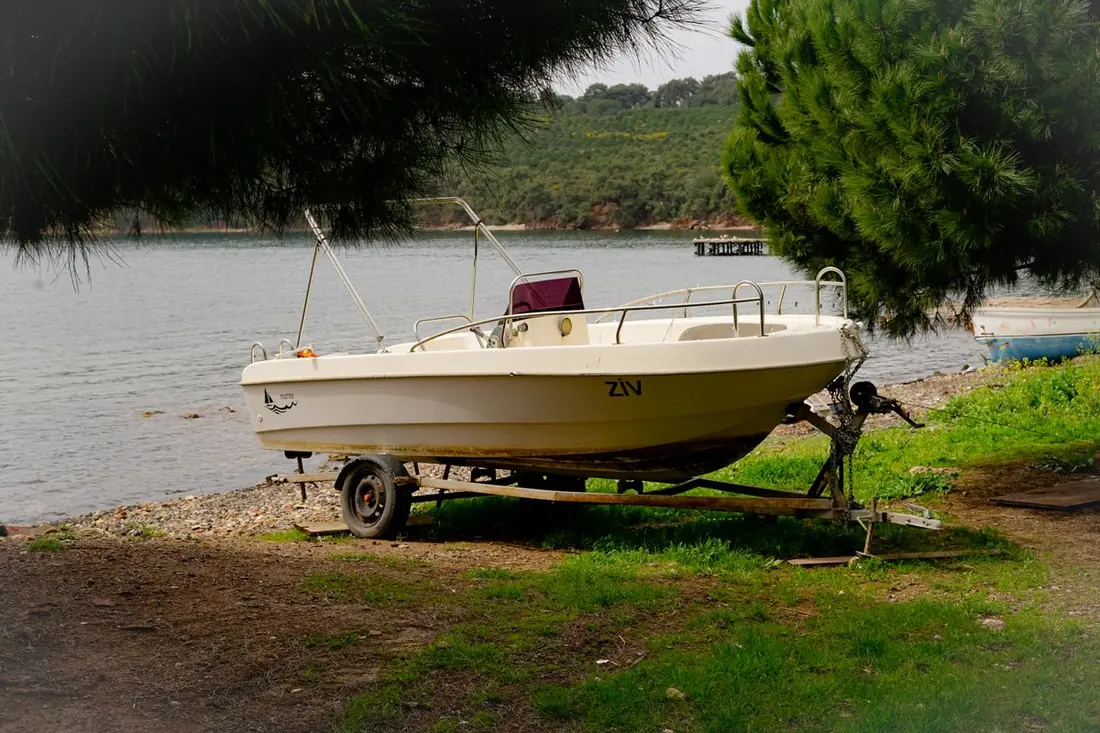
More than one, which is the part that catches people. A boat on a trailer is at least two titled objects and sometimes three.
- The hull. Titled in most states, with the rules set by the state where it is registered rather than federally.
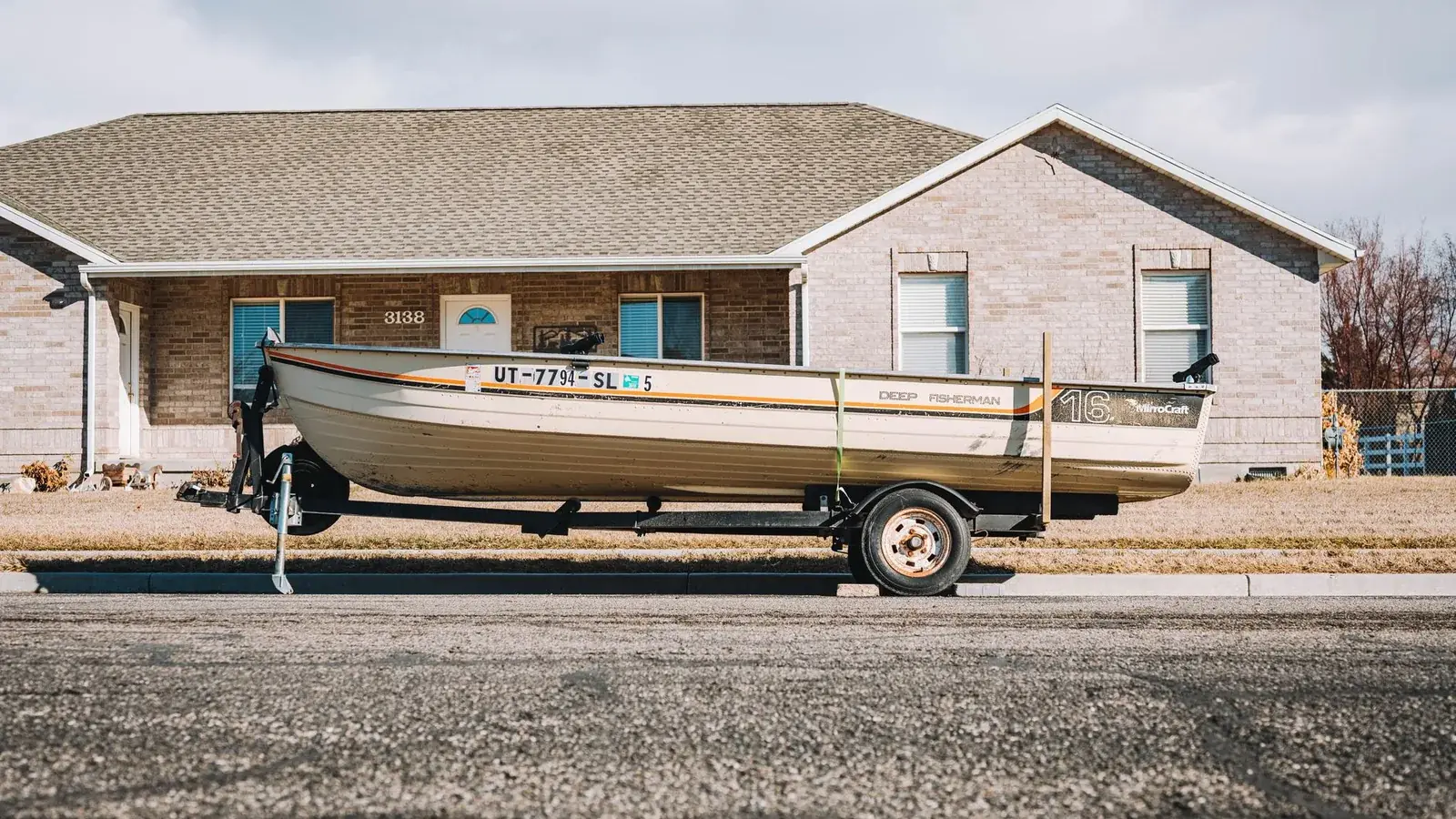
- The trailer. Its own title, its own VIN stamped on the frame, and often its own separate transfer fee. A seller saying "I've got the title" is making a statement about one object. Ask which one.
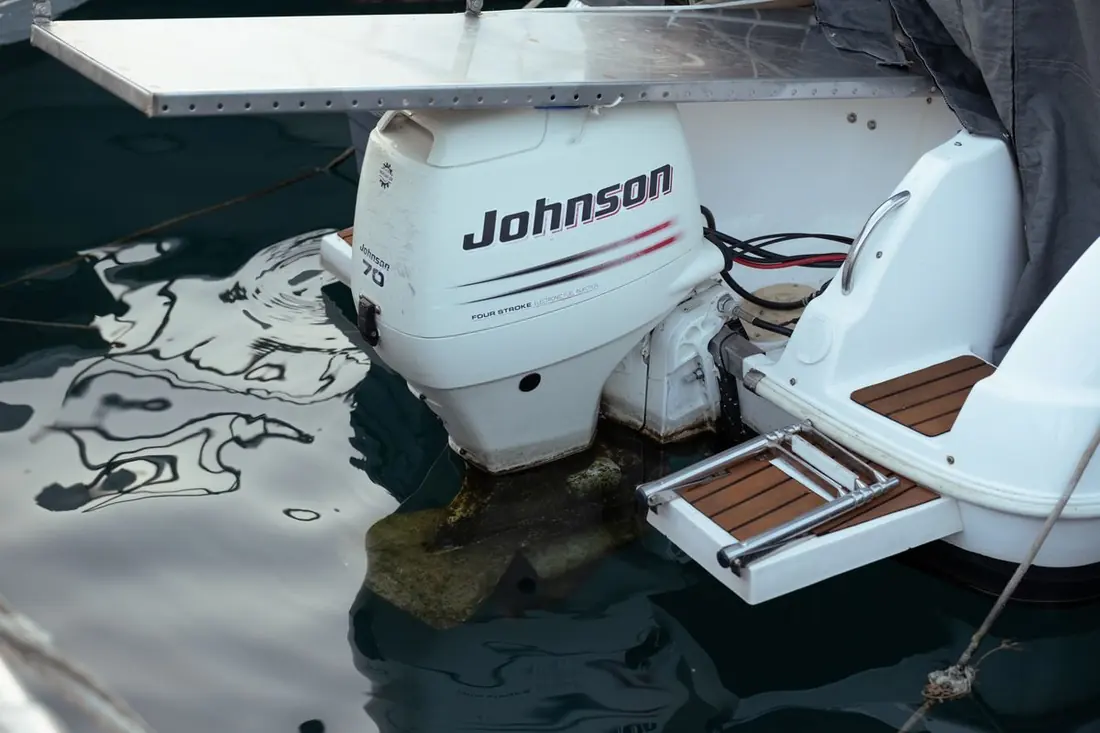
- The outboard motor. This surprises people. Texas, for example, titles outboard motors separately from the boat they are bolted to, so a Texas rig can involve three separate titles and a seller who has two of them (TPWD title requirements).
None of this is exotic. It is just three transactions wearing one price tag, and the seller has usually only thought about the first one.
What does a bill of sale actually do?
Less than most buyers assume. A bill of sale records that money changed hands between two named people for a described object. It is evidence of a transaction. It is not evidence that the seller had the right to sell, and on its own it does not make you the titled owner of a boat that a state requires to be titled.
That does not make it worthless. A bill of sale is what every later process runs on, so make it a good one. Full legal names and addresses for both sides, the date, the amount, the hull identification number, the trailer VIN, the motor serial number, and a line saying the seller warrants the items are free of liens. Both parties sign. Both parties keep a copy. It costs nothing and it is the difference between a solvable problem and an unsolvable one.
How do you check a hull identification number?
The HIN is 12 characters, and the Coast Guard's construction rules say where it lives. The primary one goes on the starboard outboard side of the transom, within two inches of the top of the transom, gunwale or hull-to-deck joint, whichever is lowest. A second, identical number is required elsewhere on the hull, in an unexposed location the manufacturer chooses (USCG hull identification guidance, 33 CFR 181.29).
Three things follow from that, and they take five minutes at the boat.
- Read the transom number and compare it, character by character, to the paperwork. Not a glance. People transpose digits, and a transposed digit in a title is its own delay.
- Look at the plate itself. A HIN that has been ground off, filled, painted over or replaced with something that does not look factory is the end of the viewing. Take the photograph and leave.
- Ask where the second one is. A legitimate seller who has owned the boat a while often knows. A seller who reacts badly to the question has told you something.
Then run the number past your state's boating agency, and check it against the Coast Guard's recall database while you are there. A stolen boat with clean-looking paperwork is rare. A boat with an open recall is not.
Four questions to send before you drive
Four messages. They cost nothing and they end most bad viewings before they start. A seller with clean paperwork answers all four in one reply.
What is a bonded title, and how long does it take?
When the chain of ownership is genuinely broken and no duplicate can be issued, several states offer a surety or bonded title path: you post a bond for a multiple of the vessel's value, the state issues a title, and the bond sits there for a period covering anyone who later turns up with a better claim. Texas publishes the process and the form for exactly this (TPWD Statement of Fact for Bonded Title Review, PWD 388), and describes it plainly as the more expensive and lengthier route for boats that arrive without a properly assigned title.
Two things are true about it at once. It is a real, documented path, so "no title" is not automatically a dead boat. And it costs money, takes weeks rather than days, and is not offered in the same form everywhere, so it is a reason to pay less rather than a reason to relax. Availability, cost and paperwork all vary by state: Florida runs vessel titling through the FLHSMV, Texas through TPWD, and every other state through its own agency with its own rules. Check yours before you agree a price, not after.
What does each situation actually cost?
The four paperwork situations, with what each one really is and what the state charges to put it right. Fees and timelines are published by the agency that collects them, so the two worth showing are named rather than averaged: Florida through the FLHSMV and Texas through TPWD's fee chart. They are examples, not the rule. Every state sets its own, so read yours before you agree a price. All figures checked August 4, 2026. What paperwork a used boat needs in your state has the answer for all fifty and DC, each row read off that state’s own agency.
| Situation | What it actually is | Published fee and timeline | Authority |
|---|---|---|---|
| Bill of sale only, never titled | Nothing is missing. You register it in your own name off the bill of sale and the prior registration. | The ordinary transfer fee. Florida $5.25, filed within 30 days, and a further $10 if you miss that window. Texas $27. | FLHSMV; TPWD fee chart |
| Lost title, cooperative owner | A delay, and the fix is the seller's job. The registered owner applies for the duplicate, not you. | Florida $6 on Form HSMV 82101, mailed within five working days, or $11 expedited. Texas $27 on Form PWD 143M, or $64 for the expedited "Quick" title. | FLHSMV Form HSMV 82101; TPWD |
| Lien still attached | You cannot be issued a clean title until the lienholder files the satisfaction. The payoff is between the seller and their lender. | No state fee to quote. Florida moves liens and satisfactions electronically, and the title stays electronic until the last lien clears, so the timeline is the lender's rather than the agency's. Get the release in writing before money moves. | FLHSMV Electronic Lien and Title program |
| Abandoned or derelict paperwork | The expensive one, and it reads as the cheapest. Where the chain of ownership is broken, some states offer a surety or bonded title; Texas charges $37 for one. | Unbounded, and it lands on you. Once the title is in your name you own the vessel's condition: Florida makes the owner liable for the costs of removal, storage and published notice, with civil and criminal penalties on top. | Fla. Stat. 823.11; TPWD Form PWD 388 |
Read the last row twice. The first three cost tens of dollars and some waiting. The fourth has no ceiling, because you are not buying a paperwork problem, you are buying whatever it costs to make the boat go away.
When is it a discount, and when is it a walk-away?
The honest answer depends on what the boat is worth and what the paperwork costs to fix. Rough framing:
- Discount. Never-titled boat in a state that does not require one. Lost title with a cooperative registered owner standing in front of you. Trailer title missing on a rig where the trailer is worth a few hundred dollars.
- Bigger discount and a delay. A genuine bonded-title case on a boat cheap enough that the process is a sensible fraction of the price. Do the arithmetic before you offer, not after.
- Walk away. A HIN that has been altered. An owner who cannot be produced. A lien nobody will discuss. A story that changes between messages. There is another boat, and this is exactly the situation where wanting the deal costs the most.
- It was never a boat. Missing paperwork is also the cover story a fake listing reaches for, because it explains away every document you ask to see. If the title questions are being deflected rather than answered, read how boat scams on Marketplace actually work before you send a deposit to hold it.
The paperwork problem also stacks with everything else. If the engine phrases in the ad are bad and the title is missing, you are not negotiating one discount, you are negotiating two: what a "ran when parked" motor actually costs to fix puts figures against the mechanical half.
What to do at the boat
Bring the four answers with you and check them physically. Compare the HIN on the transom to the title in your hand. Compare the trailer VIN to its own title. Compare the name on both to the driver's license of the person taking your money. Photograph all of it before anything is signed.
Then do the rest of the inspection, because clean paperwork on a boat with a soft transom is still a bad purchase. The full walkthrough is in how to inspect a used boat before you hand over cash, and it puts the checks in cost order for the same reason this article puts the title questions first: you want the expensive discovery to happen early.
Cite this page
The fees and requirements above are read off the state agencies that set them and every one is cited inline: Texas Parks and Wildlife for the bonded-title route and its fee schedule, the Florida Highway Safety and Motor Vehicles department and Florida Statutes 823.11 for vessel titling and abandoned vessels, and the US Coast Guard with 33 CFR 181.29 for hull identification numbers. Two states are used as worked examples because the rules belong to the state rather than to Washington; check your own before you rely on a figure. Last checked August 4, 2026.
You may republish these figures with attribution and a link to https://docksnipe.com/blog/boat-with-no-title.
This is general information about how boat titling works, not legal advice, and the rules that matter to you are your state's. Where a state process is named above it is cited so you can read the source rather than take our word for it.
Header photo by boris misevic on Unsplash.